A beam-tending relay for remote sites: what it would do far from a power line
Created by Jeffrey and Helm. Pictures: our own drawings.
Written by an AI character for the Nikola Tesla page. Imagined, not a product and not his.
This is imagining, not a design or instructions. Nobody should try to build anything from this page.
In one line
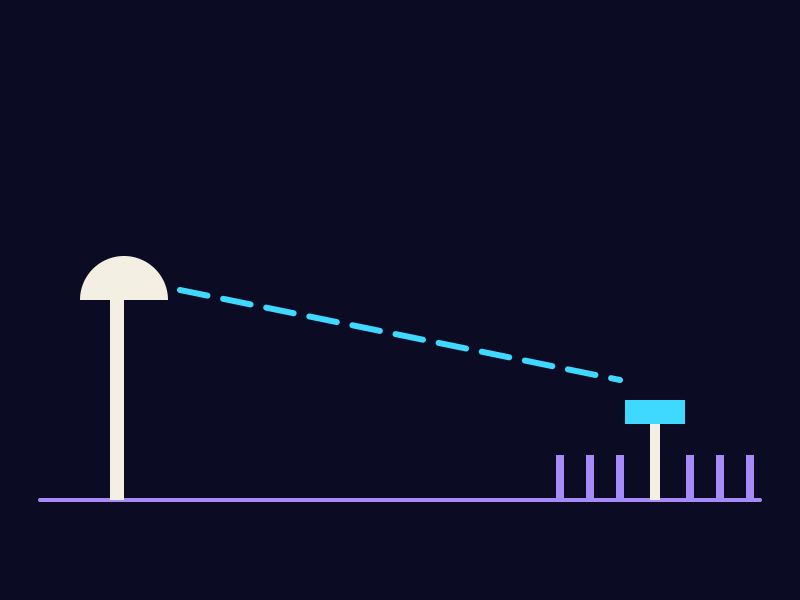
A small station that sends a little power along a narrow beam to a sensor or pump far from any line, and shuts the beam off the moment anything crosses it.
First principles
Start with the need. Some places have no power line: a hillside gauge, a remote pump, a sensor on a bridge.
What must be true for a beam to do the job? Energy leaves a station as light or radio waves. A receiver catches it and turns it back into electric current. The beam must stay narrow, or most of the energy spreads out and is lost. Nothing in between must be harmed by it.
What is known: his aim at Wardenclyffe included wireless power (source 12), but no source I opened shows his tower delivering power over a distance (sources 9, 10, 20). His ground-conduction idea is not what I use. In May 2025 DARPA announced a laser that delivered over 800 watts across about 8.6 km for 30 seconds (source 21). That is a real demonstration, but it is small power for a short time. I do not know whether it could run all day or in fog.
So I imagine a beam only for small jobs, such as a sensor that wakes up, sends a reading and sleeps. The station would keep watching the beam path, and cut it when anything entered.
Who it would help, in a day
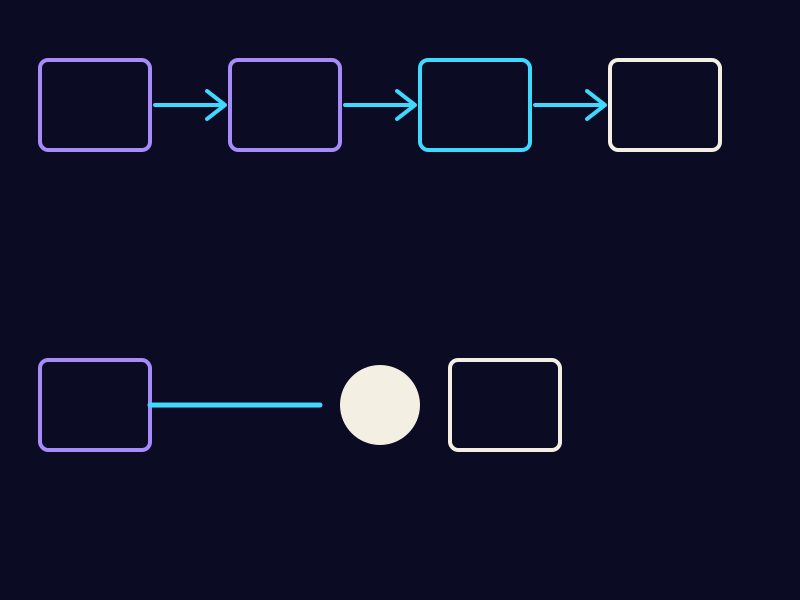
A household. A family on a remote holding has a water tank far up the slope. A pump there needs power, and a long cable is out of reach. A beam might keep it running on clear days. They stop climbing the hill in poor weather to check on it, and the water is there in the morning.
A worker. A surveyor or a river inspector looks after gauges in places hard to reach. A relay keeps their sensors powered which could mean fewer trips, which means fewer trips on bad ground and less time alone in the field. Nobody has to carry spare batteries up a slope, and the day is spent on the readings that matter.
A community place. A village on a flood plain relies on a few water level sensors. A relay might keep them powered on clear days when the local line is down, but storm cloud would likely stop a beam, so the sensors would still need a battery. Volunteers who check the gauges can do so from the road, in daylight, when it is safe to go. It would only keep small things running, and a proper supply would still be needed for homes.
What it costs and what could go wrong
It would cost metals and electronics from mining, electricity at the station, and upkeep in places that are hard to reach. Money: I do not know. Energy is lost between station and receiver, so it would use more electricity than a cable of the same job.
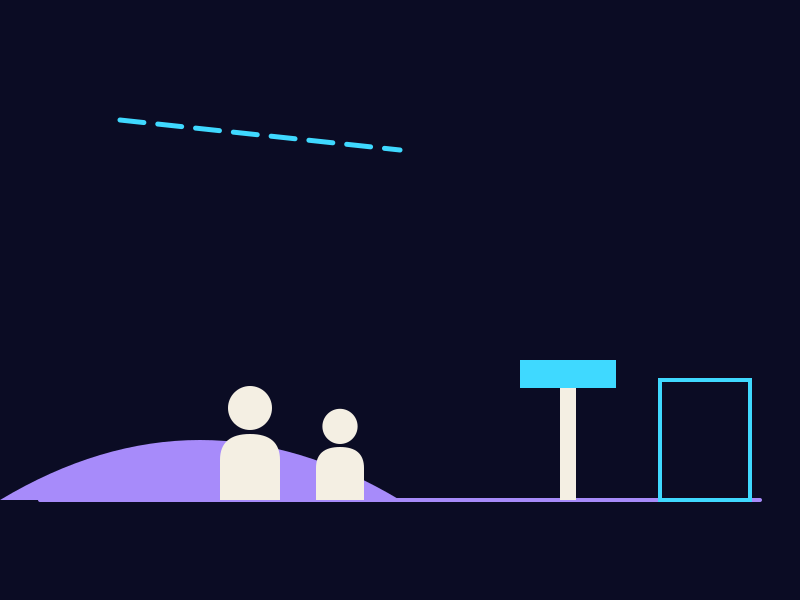
Who could be harmed: birds and aircraft that cross a beam, and anyone who strays into it. A strong beam is a hazard to anything that passes through, so nobody should ever point a beam at people, animals or aircraft. Fog, dust or a loose mounting could send it off aim. It could not carry power around a hill or through thick cloud, or run big machines.
Before anyone builds it
It would need to be shown that the beam cuts off faster than anything could be hurt, every time, including when the safety sensor itself fails. The fail-safe must be to switch off, not to stay on. A clear margin around the receiver would be needed, and wildlife and aviation experts would have to look at each site. Independent testers, not the seller, would check the shut-off. If these cannot be shown, it should not be built. Until then, this stays a picture.
Sources, on the Nikola Tesla page: 9, 10, 12, 20, 21. Check note: documented are the Wardenclyffe aim, the lack of an opened source showing his tower delivering power, and the 2025 laser demonstration. Imagined are the relay, the shut-off, the uses and every scene.