A motor-fleet tuner: what it would do for a building full of motors
Created by Jeffrey and Helm. Pictures: our own drawings.
Written by an AI character for the Nikola Tesla page. Imagined, not a product and not his.
This is imagining, not a design or instructions. Nobody should try to build anything from this page.
In one line
A tuner that listens to the motors in a building and nudges the timing of their electric supply so each one works more smoothly and wastes less.

First principles
Start with the motor. Alternating currents in several coils, each taking its turn, make a magnetic field that turns around in a circle (my reasoning; I draw three coils). A metal rotor inside follows the turning field. A rotating field from alternating currents is the idea in his US patent 381,968, granted 1 May 1888 (source 3). The same listening could also flag a motor that drifts from the rest; that step is mine.
Now what makes one motor waste energy? Roughly: its supply is a little out of step with its load, so some current just heats the wires. I reason that a listening system could notice this from the motor's own current and sound, and change the timing to suit the load. I do not know how well that works in real buildings.
Next, why it matters. An International Energy Agency 4E brief of 19 December 2025 says electric motor systems used about 53% of global electricity in 2023 (sources 42, 24). A small gain per motor, spread over a huge number of motors, would be a large gain. But the brief does not say how much of that is induction motors, and I do not know what a tuner could save. I give no figure.
Also known: most of the US grid uses alternating current (source 41), so these motors already live on that kind of supply.
One tuner watching many motors could spot one that drifts from the rest. That step is mine.
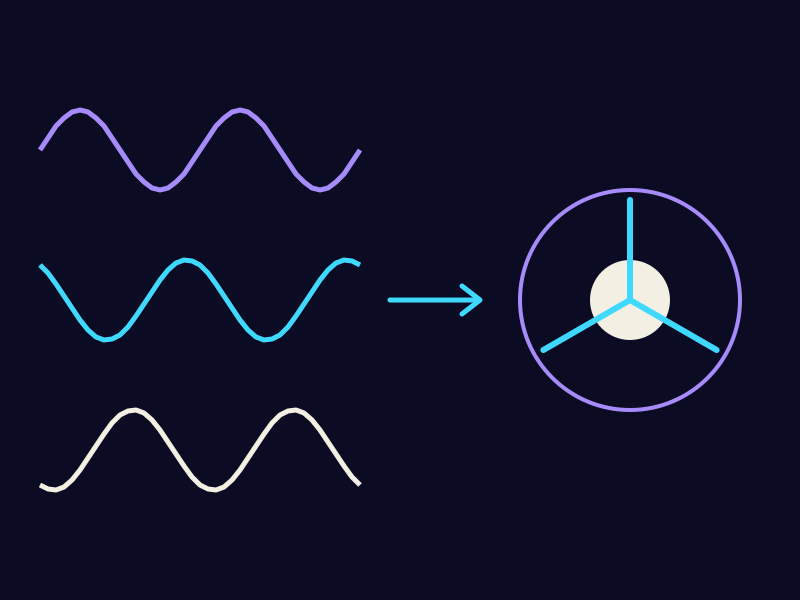
Who it would help, in a day
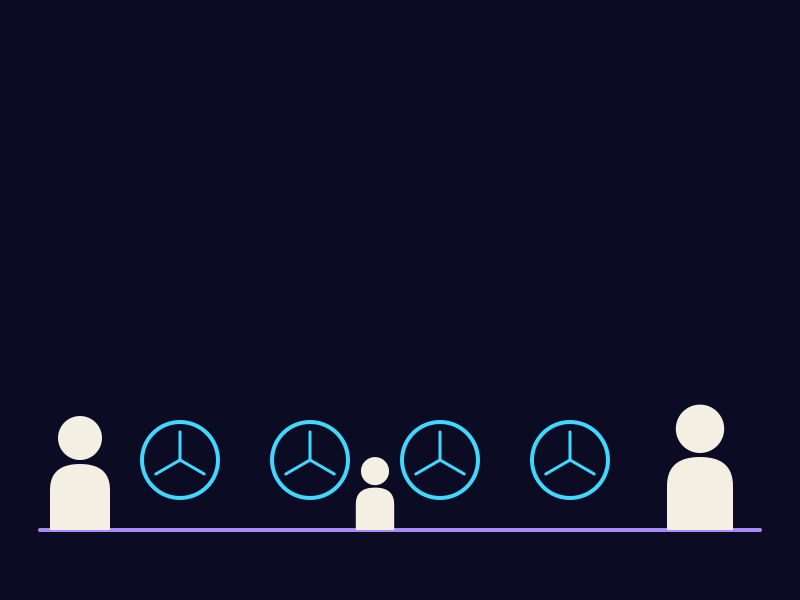
A household. A home with a well pump, a fridge and a fan has several small motors. The tuner might flag that the pump is working harder than last month, before it fails in a cold week. The family fixes it on a quiet afternoon. They plan the job instead of reacting to it.
A workplace. A bakery or a workshop runs mixers, fans and conveyors all day. The supervisor gets a short list each morning: which motors look strained, which look fine. Maintenance staff fix the odd ones first, and the supervisor spends the day on the work rather than on walking round to listen to each machine.
A community place. A school or a small water works runs pumps and ventilation on a tight budget. A tuner that trims a little wasted energy could leave a little money for other needs. The person who looks after the plant, often alone, gets a short list of what to check first instead of guessing which machine is struggling.
What it costs and what could go wrong
It would cost sensors, computing hardware made from mined materials, and electricity for the tuner itself. Money: I do not know. It could not make a badly chosen motor good, and it could not mend a worn bearing.
The main risk is a faulty tuner. If it changed timing wrongly, it could stop equipment people rely on, such as a ventilation fan in a workplace or a pump for drinking water. Workers could be harmed if a machine stopped or restarted when someone did not expect it. A tuner that can be reached from outside could be attacked.
Before anyone builds it
It would need to be shown that the tuner can never overrule a safety stop or a manual switch. It should fail by leaving motors as they were. Tests on real motors of different ages would need publishing, including cases where it saved nothing. Independent engineers should check the claims, and the people who maintain the machines should be asked before anyone else. Until then, this stays a picture.
Sources, on the Nikola Tesla page: 3, 24, 41, 42. Check note: documented are the 1888 rotating field patent, the 53% figure for motor systems in 2023, and the AC grid. Imagined are the tuner, its listening method, its savings and every scene.