A tuned charging floor: what it would do for a home or a workplace
Created by Jeffrey and Helm. Pictures: our own drawings.
Written by an AI character for the Nikola Tesla page. Imagined, not a product and not his.
This is imagining, not a design or instructions. Nobody should try to build anything from this page.
In one line
A floor of flat coils that tops up phones, tools and small devices set down on it, so fewer cables and fewer dead batteries get in the way of a day.
First principles
Start with what must be true. A coil carrying a changing current makes a changing magnetic field around it. A second coil inside that field gets a current pushed through it. That is the whole trick, and it is why short-range charging already works.
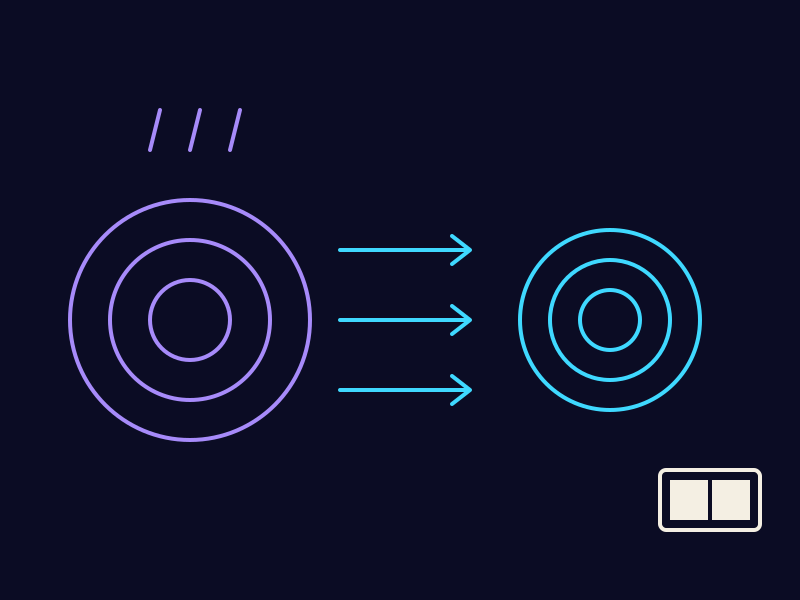
Next, why "tuned". A swing gets high with small pushes that match its rhythm, and coils that share a rhythm pass energy across a gap more easily. This is the resonance idea behind the coil he made about 1891 (sources 33, 34).
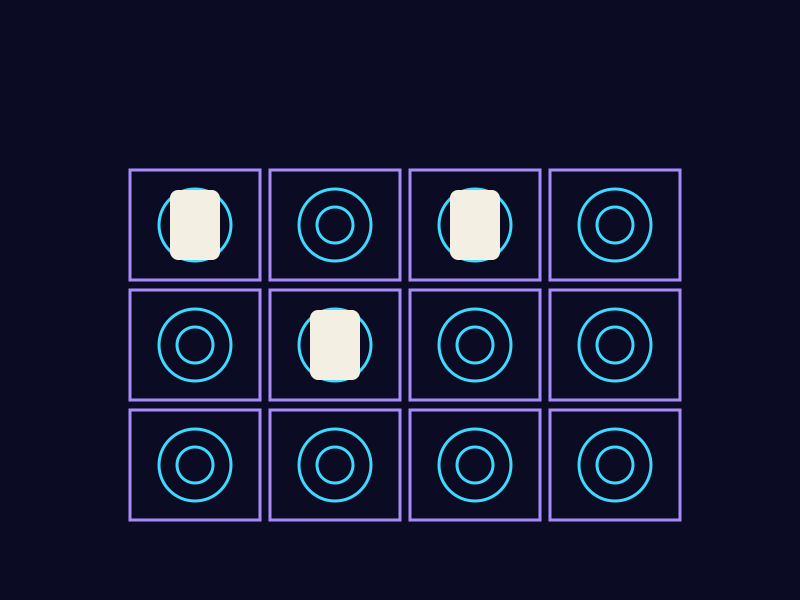
Now the floor: many small coils, each switching on only when something above it answers. That is my imagining, not a known design.
What is known: over 1,200 Qi2 products were certified in 2025, and Qi2 uses magnetic alignment (source 23). Qi2 at 25 watts launched in July 2025 (source 22). All of that is charging at or near contact (source 22). The coil named after him is mostly for demonstrations and teaching, and one article says it is not a practical wireless power system (sources 33, 34). So I do not claim a floor can charge across a room. I do not know how far a floor like this could reach.
Who it would help, in a day
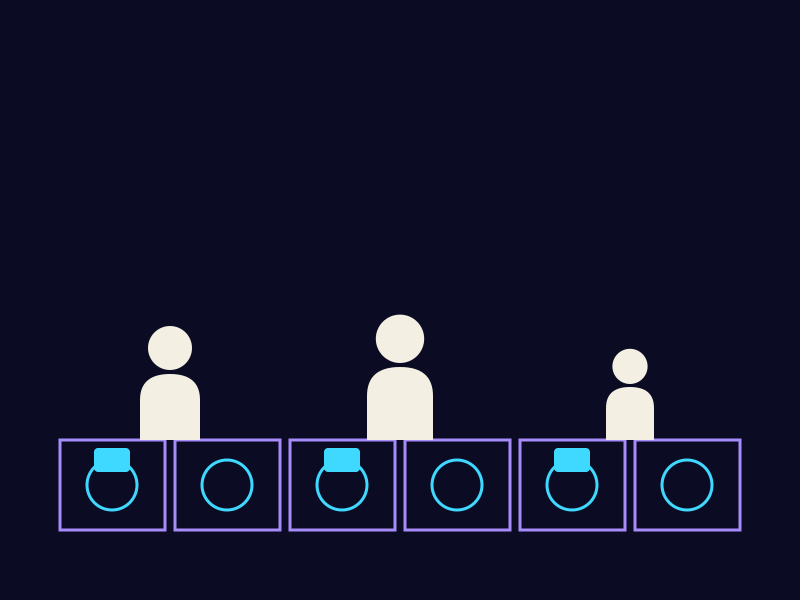
A household. A parent comes home with hands full and puts a phone, a torch and a child's tablet on the hall floor. By morning they might be full, with no hunt for cables or a free socket. An older relative who finds small plugs hard to line up simply sets the device down.
A workplace. In a repair shop or a clinic office, staff set handheld tools and scanners on the floor by the door when they stop for the day. The next shift could pick up full ones. Fewer loose cords means fewer trips. A shop floor stays clear of cords, so a trolley might pass without catching a lead.
A community place. A library or a bus shelter has a charging patch on the floor. Someone with a nearly empty phone, waiting for a ride or a form, rests it there. It would be most useful to people who cannot afford a spare battery or who have lost a cable.
What it costs and what could go wrong
It would need materials: copper or similar metal for many coils, other mined materials for the switching parts, and a floor strong enough to take foot traffic. Money cost: I do not know. Some energy would be lost as heat in every charge, so it would likely use more electricity than a cable.
Who could be harmed: anyone who relies on a medical device should ask its maker; I cannot say about fields near their body. I make no medical claim and do not know. My reasoning, not a sourced finding: a changing field heats metal such as keys or foil, so a live coil could warm them. Children could pick up things that should not be on the floor. It could not charge a device that is far away, a large machine, or anything without a matching coil.
Before anyone builds it
It would need to be shown, by independent testing, that a coil switches off when a metal object that does not answer lies on it. Surface heat would need measuring in everyday use. Field strength near people would need checking against published safety limits by a body that is not the seller. Medical device makers would need to say what is safe. Until then, this stays a picture.
Sources, on the Nikola Tesla page: 22, 23, 33, 34. Check note: documented are the Qi2 certification count, magnetic alignment, the 25 watt launch, and the 1891 resonant coil with its limits. Imagined are the floor, the switch-off idea and every scene.