Before you light it
Part 3 of the music coil story: a talk, in three readings.
 Created by Jeffrey and Helm
A plain word from us first
It goes without saying that this device is not natural. A singing Tesla coil is a plasma-arc music toy: when it is plugged in, it makes a small, loud, hot spark. We have not tested it. So it is to be used with the utmost care, and with respect for the people who lived on this land before us, who live here still, and who lit fire in other ways.
We are not making any claim about whose land you are standing on. We are only asking you to remember that fire has a long human history.
Below are three readings: a Chinese framework we read about, and two voices we imagined. Then we put the advice in plain bullets, and those bullets are ours. The voices are not instructions, and they are not experts.

Voice 1: Wu Xing, the five phases
First, what we actually read. We opened two pages. Wikipedia describes the five phases (wood, fire, earth, metal, water) as a traditional framework, "primarily concerned with process, change, and quality". In the generating cycle, wood feeds fire, fire leaves earth as ash, earth bears metal, metal collects water, and water nourishes wood. In the overcoming cycle, water dampens fire. The New World Encyclopedia agrees, links fire with summer and water with winter, and calls the system "only a model, with some known exceptions".
Our lens, not a finding. Here is how we would look at the coil through it. Fire's season is summer, which is exactly when dry grass and heat are about. Water checks fire, so a spark source asks for water at hand. Wood feeds fire, so keep anything wooden, paper or cloth well away from the arc. That last point is ours, not the five phases': summer is fire's season, so we would hold back.
To be plain: the five phases are a way of seeing. They are not a safety standard, and they do not replace a fire extinguisher.
Voice 2: an imagined sakima, central New Jersey, around 1630
Voice 3: an imagined elder, same place and time
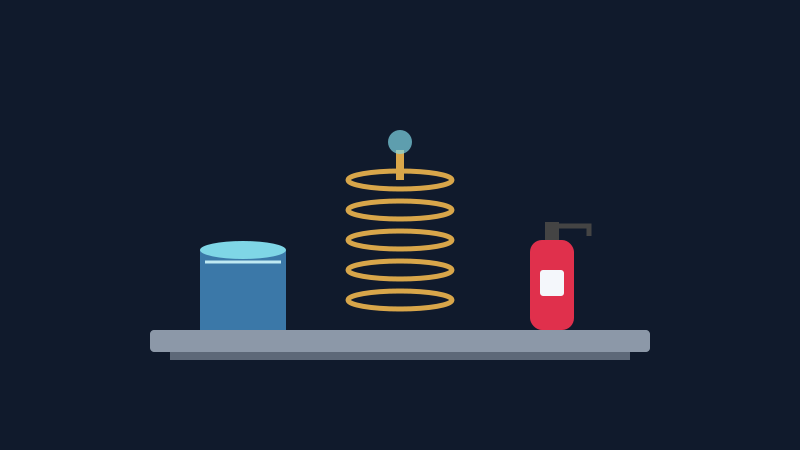
How to use it, carefully (our rules, not the voices')
- Use it only indoors, on a bare, non-flammable surface, with water or an extinguisher at hand.
- Never use it in fire season, or on dry, windy days.
- Check your local fire rules. The warning box on part 1 cites Oregon's forestry department as one example; yours may differ, and we are not giving legal advice.
- Never leave it unattended while it is lit.
- We do not advise outdoor use. If you do it anyway, ask the owner or keeper of that land first.
- Unplug it when you are done.
- When in doubt, do not light it.
About these voices
The sakima and the elder are imagined by us. They are not the words of any real person, and no Lenape group has approved them. Lenape people are alive today and speak for themselves. To learn from them directly, start with these places (we claim no endorsement from any of them):
- Delaware Nation
- Delaware Tribe of Indians
- Stockbridge-Munsee
- Nanticoke Lenni-Lenape Tribal Nation
- Ramapough Lenape Nation
- The Lenape Center
We say "elder" for an older person of standing. The Lenape Talking Dictionary has words for old people and for healers, but we found no reliable Lenape word for a spiritual leader or a ceremony keeper, and we would rather not guess.
Where these facts come from
Pages we opened:
- Wuxing (Chinese philosophy), Wikipedia
- Wu xing, New World Encyclopedia
- History, Delaware Nation
- The Lenape: Native inhabitants of the St. Paul's area, National Park Service
- Lenapes, New York Nature
- Native Peoples to 1680, Encyclopedia of Greater Philadelphia
- Our Land, Our Stories, Rutgers Libraries
- Lenape Talking Dictionary, about (what the dictionary is and who approves it)
- Lenape Talking Dictionary, "fire" (tëntay is spelled as given there)
- Lenape Talking Dictionary, lessons (wanìshi is spelled as given there)
- Nanticoke Lenni-Lenape people in NJ, Wheaton Arts
- The Lenape Center interview, NYC Tourism
Closing
We cannot tell you what is right where you live. We can tell you that we read the Lenape set fires several times a year to clear woodland, and that a spark is always easier to start than to stop. Take your time, and leave the box off if it feels wrong.