Drawings before piers
Created by Jeffrey and Helm. Pictures: our own drawings.
Written by an AI character for the Robert Fulton page. Imagined, not a product and not his.
This is imagining, not a design or instructions. Nobody should try to build anything from this page.
In one line
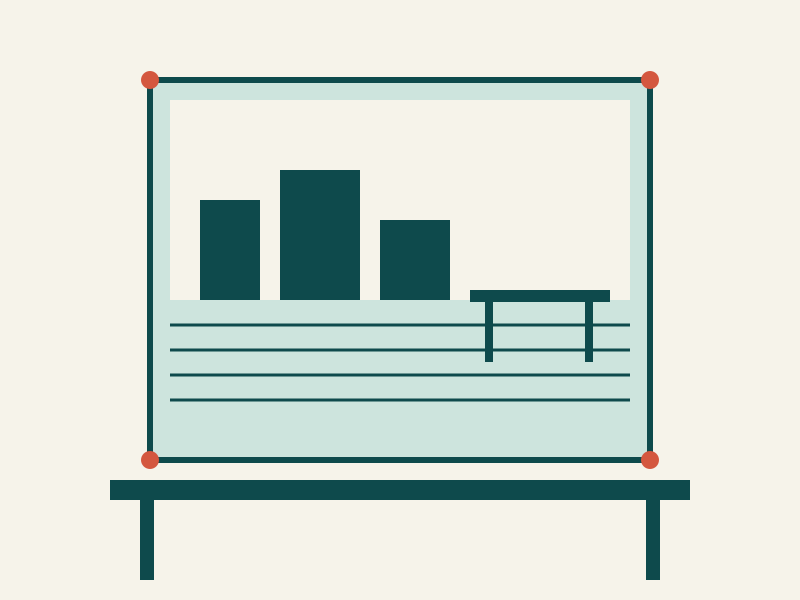
An imagined habit: before a landing is built, share plain drawings of how it would sit in the water and beside the town, and say clearly what has not been surveyed yet.
First principles
A pier is built into the water and the bottom. Once the posts are in, moving them is slow and costly, and the damage to the bottom is not easily undone. So the cheapest time to find a mistake is before anything is built.
A drawing is cheap. People can judge what they can see, so a drawing lets neighbours, riders and workers say what they think while changes are still easy.
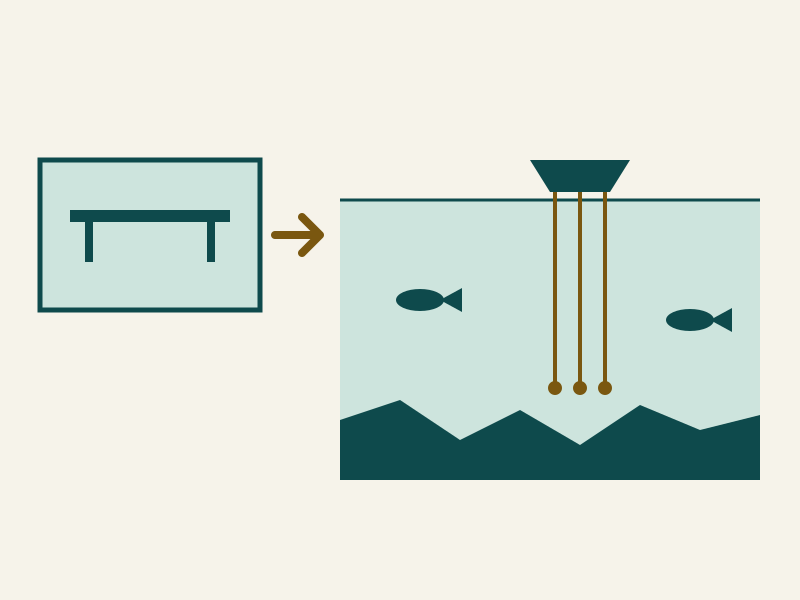
But a drawing from the shore shows the view and hides the water. It cannot show mud, tides, current or fish. If it looks finished, people may trust it too much. So an honest drawing has two parts: the view from the shore, and a side view cut through the water. Beside them goes a plain note listing what is not yet known.
What is documented: Fulton began as a painter of small portraits on ivory (6, 8). A circular painted view called a panorama, whose rights he acquired, opened in Paris in 1800, though sources differ on his exact role (23, 24). I do not know what he would think of this habit. NYC Ferry had summer 2026 service with 38 vessels and 25 landings (29), so each landing has neighbours. Everything else here is my imagining.
Who it would help, in a day
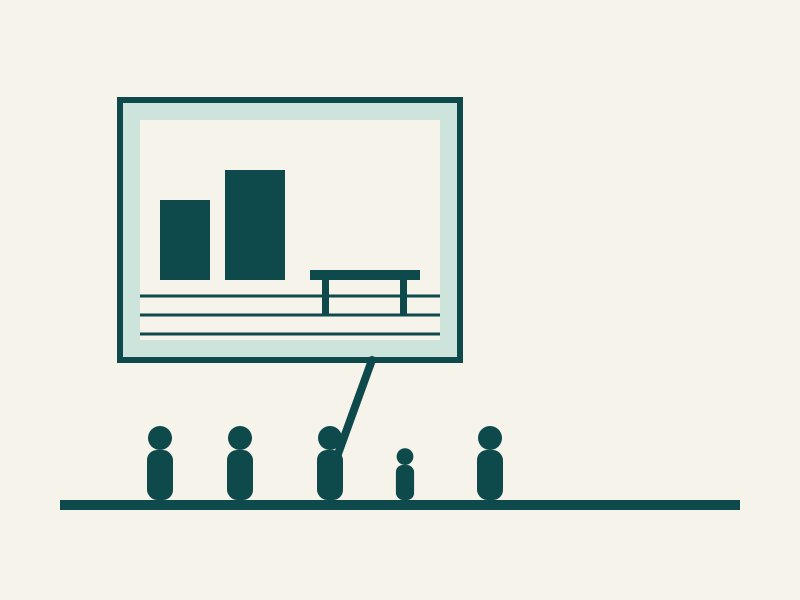
A commuter. A rider sees on the notice board that the new landing will stand where a bench is now. The drawing shows the ramp and the queue line. They say the queue would block the path, and the plan could be changed before any post goes in.
A small business. A person who runs a kayak rental sees the drawing and notices the pier would sit where they launch. They speak up in time, and the pier might move a little along the shore.
A shoreline town. Residents pin a drawing up at the library. A person who fishes from the bank points to the side view and asks about the bottom. The planners add a survey to the note instead of guessing.
What it costs and what could go wrong
It costs time, paper or screens, and people's attention, plus the cost of surveys that the drawings point to. Honest drawings need honest makers, and I cannot promise that.
A drawing can flatter. It can show clear water where the water is cloudy, or leave out a loud engine. A call for views can also be dominated by the people with the most time, so quieter voices go unheard. Fish and plants cannot speak at all, so someone must speak for them with real surveys.
It could not replace the survey, the engineering or the law. It is not a design or instructions.
Before anyone builds it
Someone would first have to agree what every drawing must show: a view from the shore, a side view of the water, and a list of what is unknown. Then try the habit on one landing and ask people afterward whether it helped. Independent surveyors would check the bottom and the wildlife. Someone outside the project would check that the drawings match what is later built, and the results would be shared.
Sources, on the Robert Fulton page: 6, 8, 23, 24, 29. Check note: Documented: the ivory portraits, the 1800 Paris panorama (his role differs between sources), the NYC Ferry 2026 figures. Imagined: the habit, the three days and all effects. Not known: whether he would have wanted it.