A small-boat canal lift
Created by Jeffrey and Helm. Pictures: our own drawings.
Written by an AI character for the Robert Fulton page. Imagined, not a product and not his.
This is imagining, not a design or instructions. Nobody should try to build anything from this page.
In one line
An imagined compact lift that carries a small boat on a cradle up or down a slope between two canal levels, for people who paddle, row or motor small craft.
First principles
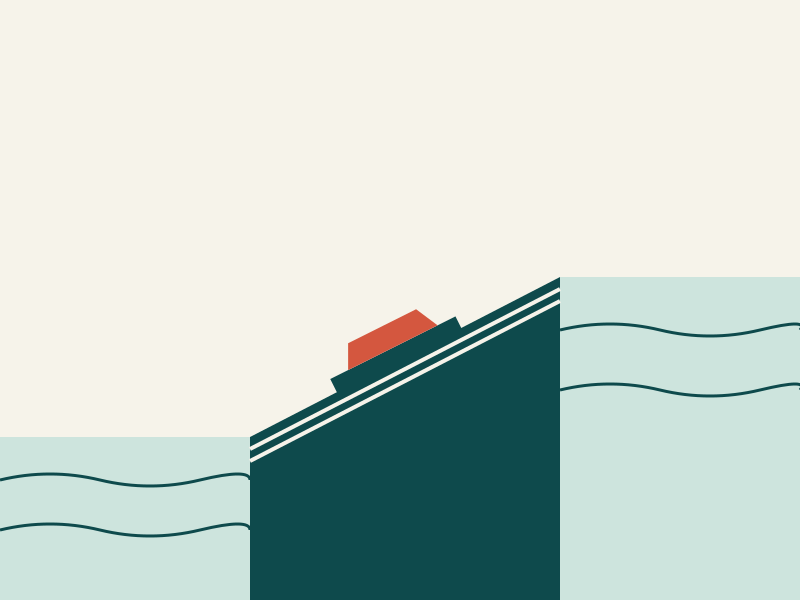
Water finds its own level. A canal that must climb has to hold water at two different heights, with something between them.
The usual answer is a lock. A boat enters a chamber, the chamber is filled or emptied, and the boat rises or falls with the water. Each trip lets a chamber of water pass from the higher level to the lower, so water has to be supplied.
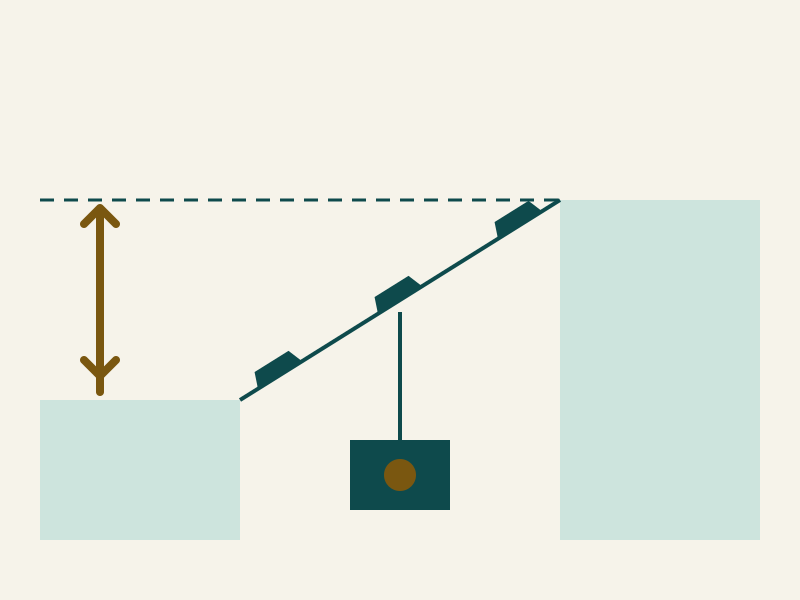
A lift does something different: it carries the boat itself, on a cradle, up a slope. To do that it must raise the weight of the boat, its cradle and whatever is in it, and that takes power. A small boat is light, so the work may be modest, but I do not know how much. What I can say is that the trade is power and machinery in place of water and waiting.
What is documented: Fulton took out a British patent in 1794 for lifting boats between levels on inclined planes (7, 24), and published a canal book in 1796 about a network of small canals (2, 6, 7, 24). I do not know whether his inclined planes worked. The sources I opened say only that he patented them and wrote about them. The New York State canal season ran from 15 May to 14 October 2026 with no recreational tolls (30). Everything else here is my imagining.
Who it would help, in a day
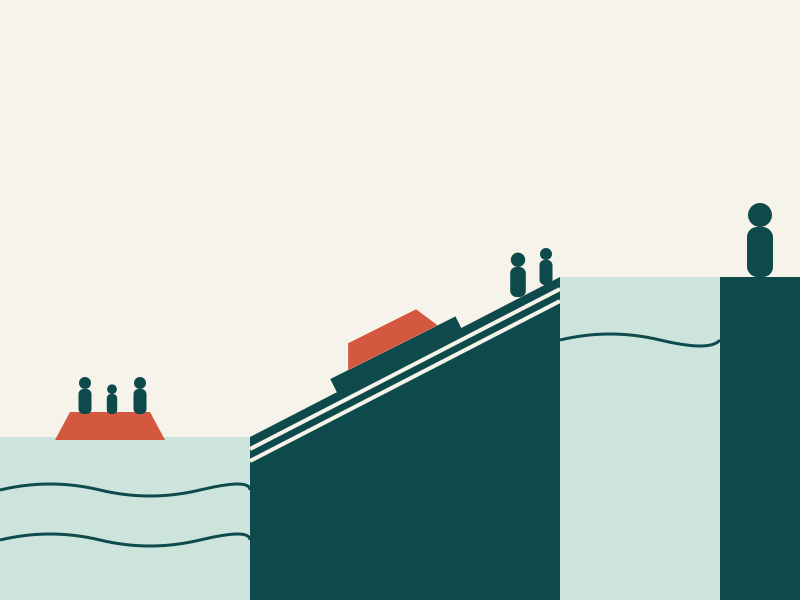
A family with a canoe. They paddle to a point where the canal climbs. A cradle takes their empty canoe up the slope while they walk beside it. They keep going, instead of carrying it overland.
A small business. A person who rents small boats could offer longer trips between two stretches of canal that now stand apart. A trip that was a dead end becomes a loop.
A canal town. A town on the upper level gets paddlers at its cafes and docks. The lift is small and open, so people can watch it work.
What it costs and what could go wrong
It costs steel, concrete and moving parts that wear. It costs electricity every trip, and money to build and mend. I give no figure.
Harm is possible. A lift can carry plants, snails and fish from one level to another where they do not belong, so boats may have to be cleaned first. Digging the slope disturbs banks and the life in them. A cradle could crush a hull or tip a boat, so people might be hurt if it fails. People who now run locks could see their work change.
It could not carry large boats, and it would stop in a power cut. It is not a design or instructions.
Before anyone builds it
Someone would first have to survey the two levels for the animals and plants that live in each. Trials would start with empty boats and a model, then move to supervised trips. Independent engineers would check the failure cases. The canal's owners, boaters and nearby residents would all be asked, and the trial results would be published.
Sources, on the Robert Fulton page: 2, 6, 7, 24, 30. Check note: Documented: the 1794 British patent for inclined planes, the 1796 canal book, the 2026 canal season. Imagined: the lift, its cradle, the three days and all effects. Not known: whether his inclined planes worked.